
Buying a House in Greece for Airbnb: 7 Checks Before a Deposit
On this page
A live listing and an AMA do not prove that the guesthouse, pool, driveway or bedrooms are lawful. Check the building file, 2025 accommodation standards and the land that keeps a Greek holiday villa operating before the deposit is at risk.
This guide is a preliminary screen for a purchase or permit question, not legal, surveying, engineering or tax advice; read the full scope and limits before relying on it.
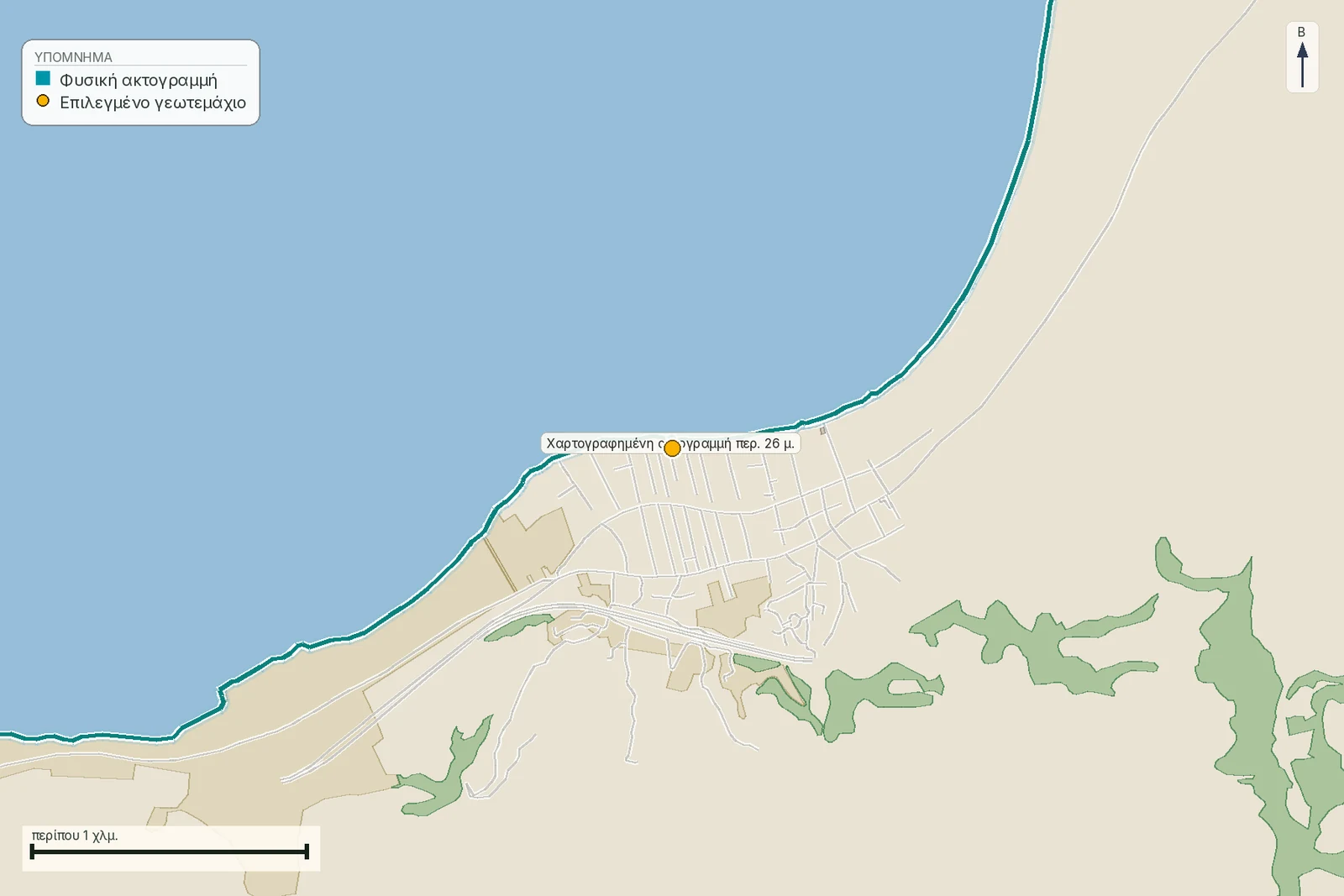
Have a specific plot in mind? The map checks from this guide can be run on it, with source and date, for EUR 29 total · VAT included. Pin it on the map →
A stone house, a pool and two acres of olives can look like a ready-made holiday-rental business. In Greece, the purchase and the letting need separate checks. The first asks whether the house, pool, access and land are lawful. The second asks whether the space may be offered for short stays and whether the new operator can register it. A live Airbnb listing answers neither question for the buyer.
That distinction matters before a deposit. A villa may have years of reviews yet contain a basement bedroom shown as storage on the permit, a pool absent from the plans, or a driveway that crosses a neighbour's land without a registered right. A sound house may simply need safety work before its first booking. Check the proposed rental against the building file, the land and the new owner's registration route.
1. Identify the operating route before valuing the income
Most buyers considering occasional, furnished stays with no service beyond bed linen start with the short-term-rental regime in article 111 of Law 4446/2016 and AADE's Short-Term Stay Property Register. Each lease must last fewer than 60 days, with no services beyond accommodation and bed linen: article 111 paragraph 1, as amended by Law 5073/2023 article 28 (ΦΕΚ Α΄ 204/11.12.2023). AADE's owner guide requires the manager to register the property, obtain an Αριθμός Μητρώου Ακινήτου (AMA), display it on every platform, and file a Short-Term Stay Declaration for each booking. See the AADE owner guide.
A staffed or serviced accommodation business may need the tourism notification route. So may a property operated as a tourist furnished residence or villa. The official EUGO procedure for tourist furnished residences and villas lists a building permit or regularisation record, fire-safety material and, where applicable, swimming-pool and wastewater documents among the file kept at the establishment. Ask a Greek accountant and tourism lawyer to state the route in writing for the services, number of properties and operator you actually propose. Do this before putting a rental-income figure into the offer.
| Proposed operation | First file to open | Question that decides the next step |
|---|---|---|
| One furnished villa; each lease under 60 days; bed linen only | AADE Short-Term Stay Property Register | Can this manager obtain and display an AMA for this exact property? |
| Several properties or an operator running a business | Accountant's tax and activity analysis | Does the operator fall into business activity, VAT or other enterprise obligations? |
| Tourist furnished residence or villa | Tourism operating-notification file | Which building, fire, wastewater and pool records must remain at the establishment? |
| Meals, transport, reception or other guest services | Written tourism-law classification | Do the services take the activity outside the simple short-term lease route? |
Budget for tax and the nightly fee. Under AADE's rental FAQ, questions 8–12 and 18, an individual offering three or more short-term-rental properties must register a business; the rentals fall under 13% VAT. Legal entities fall under business and VAT rules regardless of property count. Ask the accountant to count the registered units before adding a guesthouse. The climate resilience fee (τέλος ανθεκτικότητας στην κλιματική κρίση) is charged per occupied night per property, not per guest: €8 from April to October and €2 from November to March. For detached houses over 80 m², it is €15 and €4 respectively, under AADE decision A.1202/2024, article 1 (ΦΕΚ Β΄ 7301/31.12.2024). The guest bears the fee and the operator remits it; keep it separate from rental income.
Ask for a one-page classification note. It should name the owner or operating company, every property to be offered and the maximum stay. Record the services, the person managing the register and the route the adviser says applies. This catches a gap in many sale packs: the seller proves how they traded, while the buyer needs to know how a different person will trade after completion. If the plan includes a second cottage on the land, include it explicitly. A single sale can contain two operational units and a different tax result from the one used in the agent's brochure.
2. Make the building file describe the house guests will occupy
Since 1 October 2025, article 3 of Law 5170/2025 applies minimum specifications to properties already in, and newly entering, AADE's short-term-rental register. The rule is not satisfied by a polished listing. The accommodation must consist of lawful primary-use spaces. The Ministry's application circular says legality is evidenced by the building permit and/or the planning regularisation record.
This is where houses with land deserve more work than an urban flat. Give the buyer's engineer the deed, current topographic diagram, permit and approved plans, Electronic Building Identity, regularisation papers and the actual floor plan used by guests. The engineer should match the bedrooms, kitchens and living areas to the plans. Then check the pool, guesthouse, pergola, retaining walls, terraces, septic installation and access works against the same file. A room described as a store on the approved plan should not be priced as a rentable bedroom merely because it contains a bed.
The Ministry circular makes the bedroom test unusually concrete. It calls for natural-light openings at least 10% of the bedroom's clear floor area, ventilation openings at least 5%, and cooling/heating air conditioning in at least the bedrooms. The air-conditioning exception is for properties in mountainous areas at an elevation of 600 metres or more. The circular also explains that the ordinary minimum clear height for a primary-use room under the current building code is 2.50 m, while an older lawful space may be governed by the earlier 2.40 m rule. Read the source rather than measuring one number against every old house: the Ministry of Tourism's short-stay page links both the application circular and its inspection sheet.
| What the guest sees | What the buyer's engineer should find | Why it can change the offer |
|---|---|---|
| Lower-ground-floor bedroom | Approved or lawfully regularised primary use, clear height, qualifying light and ventilation | A furnished auxiliary space should not be counted as a compliant bedroom |
| Separate guesthouse | Its footprint and use in the permit, plans and Electronic Building Identity | A second rentable unit may not exist in the legal record |
| Infinity pool and plant room | Approved drawings, lawful works, electrics and the documents required by the operating route | Pool revenue and pool liability both depend on the physical and paper file |
| Terrace, wall and parking court | Approved external works, boundary position and any protected-area approvals | Outdoor guest use can sit on works omitted from a house-only review |
Request a marked-up plan instead of a verbal “all legal” answer. One colour can show approved primary-use rooms, another lawfully regularised rooms, and a third anything the engineer cannot support. Beside each bedroom, record clear area, opening sizes, clear height and the cooling and heating provision. Beside every external feature, record the drawing or approval that carries it. That sheet lets the accountant classify the rentable accommodation using the same physical facts the engineer reviewed. It also prevents a valuation from quietly including beds or amenities that must be removed, redesigned or kept out of guest use.
3. Price the safety file before you price the furnishings
Article 3 also requires civil-liability insurance; a valid electrician's declaration confirming the residual-current or anti-shock relay; extinguishers, smoke detectors, emergency lighting at exits and escape signs; a current pest-control certificate; a marked first-aid kit; and an emergency-number guide. The Ministry circular specifies one qualifying six-kilogram extinguisher per 100 m² of gross area and smoke detectors covering at least the bedrooms and kitchen. It also sets out the first-aid-kit contents.
For a remote house, turn that statutory list into a site list. Walk the escape route assuming smoke blocks the kitchen. Check that the electrical declaration covers later pool or pump wiring. Name someone who can attend a leak between changeovers. Ask the insurer whether the policy covers the pool, walls, paths and other features guests use. Ministry of Tourism officials may inspect registered properties, including in joint teams with AADE officials, after at least ten days' notice. Under Law 5170/2025, refusal of entry, a failed specification or failure to cooperate can attract a €5,000 administrative fine, with higher penalties for another failure within a year. Obtain the records and price any remedial work before agreeing the purchase budget.
| Article 3 file | Evidence to request before opening | Remote-villa follow-up |
|---|---|---|
| Civil-liability cover | Policy in force from a licensed insurer | Confirm that pools, paths, walls and the actual guest capacity are within scope |
| Electrical safety | Valid installer declaration and confirmed protective relay | Include later pump, gate, outdoor-lighting and pool circuits in the electrician's review |
| Fire and escape | Correct extinguishers, detector coverage, emergency lights and signs | Walk the exit route at night and plan attendance when the owner is abroad |
| Hygiene and response | Current pest-control certificate, specified first-aid kit and emergency list | Add nearest hospital, local taxi, manager and property directions a guest can use |
Keep expiry dates in the purchase schedule. “Certificate available” is incomplete if it lapses before the first letting season or identifies old wiring. Obtain quotations where work is needed, especially if stone walls complicate escape signs, detectors or air-conditioning runs. The buyer can then distinguish a manageable pre-opening cost from a defect that changes lawful capacity. For insurance, send the insurer the site plan and an honest description of the pool, steps, terraces, well, borehole, animals, fireplace and any guest access to agricultural land. A generic quote based only on bedroom count does not answer the risk presented by the property.
4. Trace the AMA through the sale; do not “buy” the seller's number
An AMA belongs in the evidence pack, but it is not a licence that the seller hands over with the keys. Ask for the property's AMA history, the address and property identifier used in the register, copies of recent declarations, and any Ministry correspondence. Then have the buyer's accountant confirm how the new owner will register after completion.
Law 5313/2026 article 5 (ΦΕΚ Α΄ 102/25.06.2026) amended article 111 of Law 4446/2016. Paragraph 2Α covers the Athens restriction; the new paragraph 2Β covers Thessaloniki. The transfer rule is in the new paragraph 2Γ: a property in either restricted area transferred inter vivos, whether by sale or gift, is removed from the Short-Term Stay Property Register. It cannot be registered again while the relevant restriction applies. An existing AMA therefore does not preserve the buyer's registration route.
The restricted locations and dates are specific. New registration is restricted in Athens' 1st, 2nd and 3rd municipal districts through 31 December 2026 under Joint Ministerial Decision 225563 EX 2025 (Government Gazette B 7200/31.12.2025). The same restriction applies in Thessaloniki's 1st Municipal Community from 1 July through 31 December 2026. The official housing-policy portal sets out both areas and the transfer rule. This is not a national ban on island or rural villas. For a property inside either area, make successful registration by the new owner a documented pre-deposit issue; registry history alone cannot cure the statutory bar. Elsewhere, confirm the exact property, operator and current AADE route rather than relying on the number in the listing.
5. Read the land as part of the rental operation
A house with land can fail commercially without failing the interior inspection. Guests and cleaners still need a lawful, usable route; tankers may need to reach a septic or water system; fire appliances need access; and a low coastal entrance can become unusable before water reaches the house. These are parcel questions. They are not decided by the AMA.
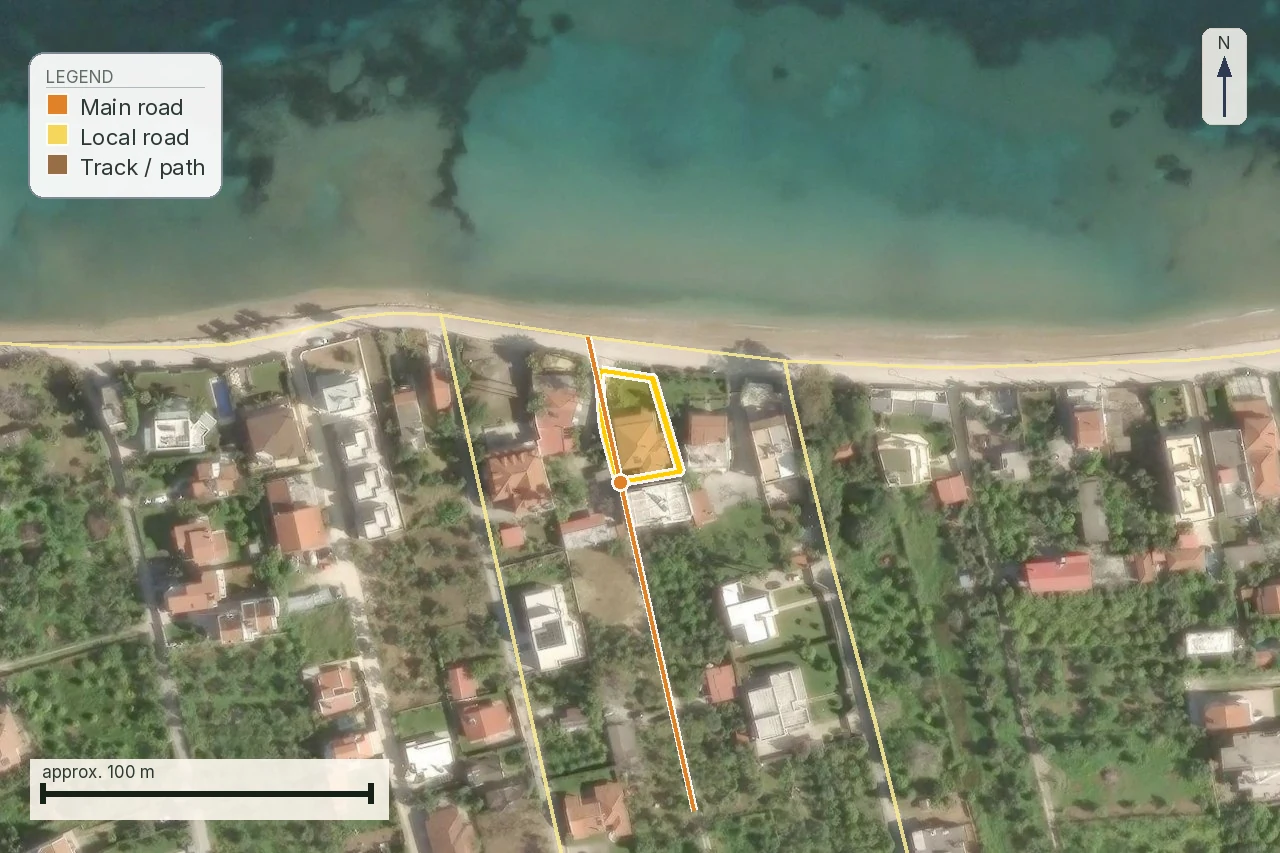
For access, ask the surveyor to mark the cadastral boundary, the physical entrance and the road on the same current topographic diagram. Ask the lawyer to identify any registered easement and the engineer to confirm whether the road is legally recognised where that matters. An OpenStreetMap line, a gravel track and a route used for twenty summers are three pieces of context; none by itself establishes legal frontage or a permanent right across another parcel.
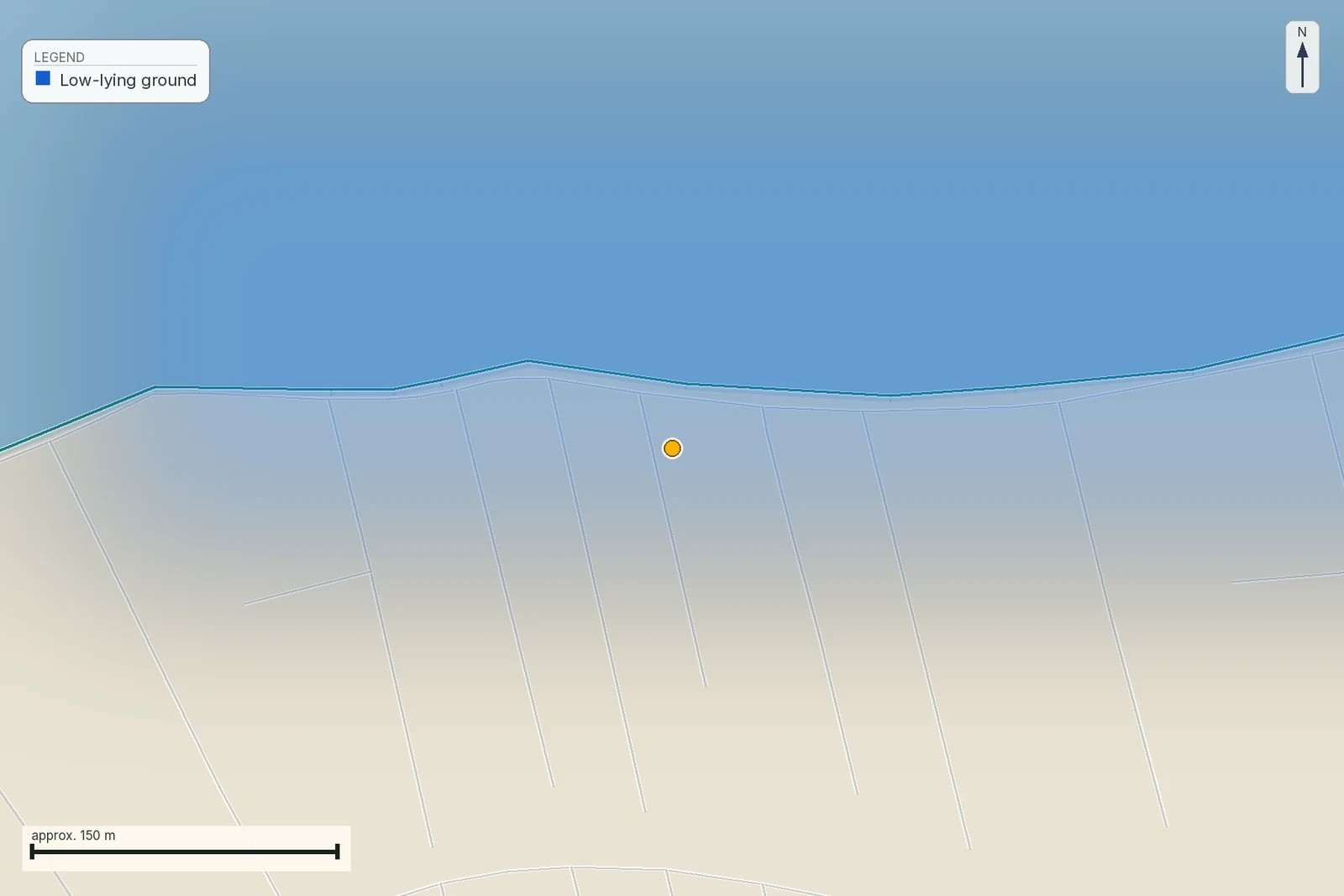
For water, obtain the current ΥΠΕΝ flood-map read, any watercourse delimitation, drainage path and site levels. Inspect after rain if practical. Ask where runoff goes when the pool terrace, parking area and roof all shed water at once. A flood map is a screening layer; the answer for construction, insurance and safe access comes from the operative public layers and the engineer's parcel work.
6. Separate water supply, wastewater and pool paperwork
“Mains nearby” is not a capacity statement, and a well is not automatically a lawful rental water supply. Request recent water bills or the connection record, evidence for any borehole or spring right, a potability analysis where guests will drink private water, and a summer operating plan for storage and outages. On an island or at the end of a rural network, ask the local operator in writing what serves the parcel.
For wastewater, locate the tank or treatment unit on the topographic plan and compare it with the permits and the number of guests in the business plan. Record capacity, access for emptying, maintenance history and lawful discharge route. Pools deserve their own line in the due-diligence table: approved drawing, plant room and electrics, water source, drainage or backwash route, safety arrangements and operating paperwork. The tourist-accommodation route expressly calls for pool supporting documents where applicable. An attractive aerial photograph cannot close any of these files.
Ask the seller for one complete operating-season evidence pack: water and electricity bills, delivery or emptying invoices, pool-service sheets, call-outs, insurance claims and written complaints that can lawfully be disclosed. Read dates as well as totals. A winter viewing will not show whether pressure falls in August, a narrow lane prevents a tanker from turning, or a pump circuit trips when air conditioning and pool equipment run together. Give the pack to the engineer who has the site plan so that capacity, access and lawful installation are checked against the same guest number.
Then name the person who will respond when the owner is abroad. Record keys and gate access, shut-off points, the wastewater alarm or inspection point, pool isolation, the nearest electrician and plumber, and the directions emergency services can follow at night. These are operating facts, not evidence of title or licensing. They still belong before the deposit because a remote villa whose systems depend on the seller's personal knowledge has a handover cost. Put missing manuals, service history and local contacts into the completion list.
7. Write deposit conditions around documents, not revenue hopes
The deposit clause should give named professionals time to answer named questions. Before money becomes non-refundable, ask the lawyer to complete the title, boundary and access-rights review. Ask the engineer to confirm the lawful use of the house, guest spaces, pool and site works. Their reviews should address planning, forest, coast, archaeology, flood and watercourse constraints. Have the tourism adviser confirm the accommodation route and the accountant confirm the tax treatment. The accountant should also confirm AMA eligibility for the new operator, including any local registration restriction that applies after the transfer. If a document is missing, identify who must obtain it and by when.
| Owner of the answer | Documented answer due before the deposit is released | Do not substitute |
|---|---|---|
| Lawyer | Title, encumbrances, boundary rights, access easements and a conditional deposit clause | Agent assurance or long use of a track |
| Engineer / surveyor | Plans reconciled to house, pool and land; lawful uses; current topographic and constraint review | Listing floor area, photographs or the seller's old plan alone |
| Accountant / tourism adviser | Operating route, AMA path, operator setup and tax treatment | The seller's AMA or platform account |
| Buyer / manager | Costed safety, water, wastewater, maintenance and emergency plan | Gross-booking screenshot or review score |
Keep revenue diligence separate. Ask for platform statements, declared booking records, tariffs, management and cleaning contracts, utility bills, insurance, repairs and season-by-season occupancy evidence that the seller can lawfully disclose. Test your own costs and downtime. Do not turn reviews, an old AMA or an agent's gross-income spreadsheet into a warranty about future bookings.
Use the completed file to decide whether to pay, reduce, condition or withhold the deposit. It should show that the house and outdoor works match the approved record. Access, water and wastewater need both physical and legal checks. The buyer needs a confirmed rental route and a costed plan for the 2025 safety requirements. Future income still needs its own assessment.
Common questions
Does the seller's AMA transfer to me when I buy the villa?
No. The new owner must establish their own registration route. In a location covered by the 2026 registration restrictions, Law 5313/2026 article 5 says an inter vivos sale or gift removes the property from the register and prevents re-registration while the restriction applies; an old AMA does not avoid that rule.
Can I rent a basement bedroom or converted store on Airbnb?
Law 5170/2025 requires lawful primary-use space. Ask the buyer's engineer to match the room's approved use, regularisation status, height, light and ventilation to the Ministry's current rules before counting it as guest accommodation.
Does an Airbnb listing prove that the Greek house is legal?
No. The listing does not reconcile the building permit, approved plans, Electronic Building Identity, pool, guesthouse, retaining works or parcel access.
Do the 2026 city restrictions affect a villa elsewhere in Greece?
The current restrictions cover Athens' 1st, 2nd and 3rd municipal districts through 31 December 2026 and Thessaloniki's 1st Municipal Community from 1 July through 31 December 2026. They are not a nationwide villa ban, though the national accommodation standards apply to registered short-term rentals throughout Greece.
What should be conditional before I pay a deposit?
At minimum: satisfactory title and boundary review; engineer approval of the house, pool and external works; legal access; planning and hazard checks; wastewater and water evidence; and written confirmation of the operating route and AMA eligibility.
Does an existing pool need a separate check?
Yes. Have the engineer reconcile the pool and plant room with the approved drawings, external works and electrical file. Then ask the tourism adviser which pool records the chosen operating route requires and the insurer what the policy covers.
Can I rent a detached guesthouse under the main house's AMA?
Do not assume so. First establish that the guesthouse lawfully exists and has the approved use and primary-use rooms claimed. Then ask AADE or the buyer's adviser how the exact units and property identifiers must be registered.
What should I check if the villa uses a well and septic tank?
Request the water right or connection evidence, current potability testing where guests will drink private water, the wastewater approval and design, maintenance history, capacity for the planned guest count, and physical tanker access.
Keep reading
Buying land in Greece: the pre-purchase checklist, in the order the payments fall
How to Verify a Greek Building Permit Before Buying a House
Legal road access in Greece: what πρόσωπο σε κοινόχρηστη οδό means, and how a road becomes public
Septic tank or sewer in Greece: the wastewater question before buying
Flood and wildfire risk on a Greek plot: the ΥΠΕΝ maps, the ρέμα line and αναδασωτέα
Check this on your own parcel
LandCheck is a map-based preflight from public data, with dated parcel evidence and questions for your local advisers. EUR 29 total · VAT included.